

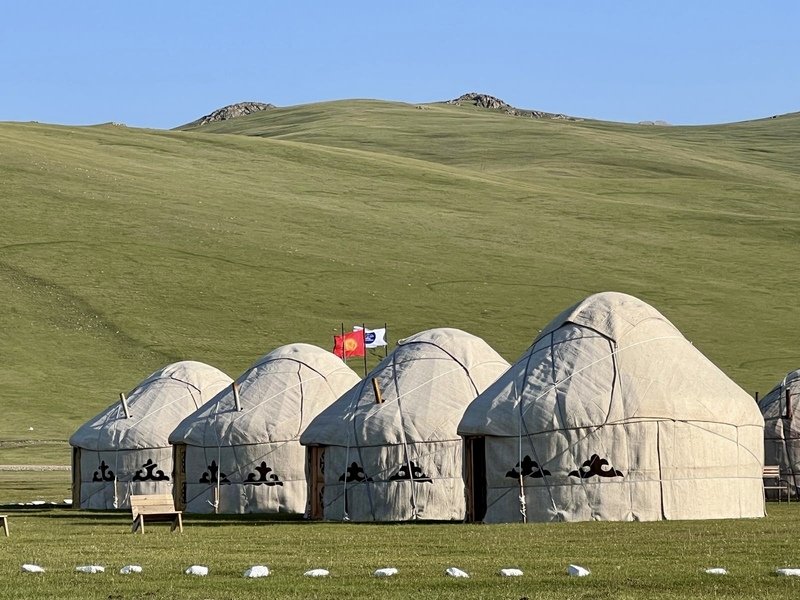
All about staying in a Kyrgyz yurt – history, traditions, what to pack, temperatures at night and the best camps at Song-Kul and Issyk-Kul.
A yurt stay in Kyrgyzstan is one of the most authentic travel experiences Central Asia has to offer. Sleeping inside a felt-lined Boz Üi (Boz Üi means “grey house” in Kyrgyz), surrounded by mountain pastures, listening to the sound of horses and the wind – it is something you will never forget. This complete guide tells you everything you need to know before your first yurt stay in Kyrgyzstan: what to expect, what to bring, how cold it gets at night, and how to be a respectful guest.
What Is a Boz ÜI? A Short History of the Kyrgyz Yurt
The Boz ÜI (Kyrgyz yurt) has been the home of Central Asian nomads. Designed for a life in constant movement, a yurt can be assembled by a skilled family in under two hours and dismantled just as quickly. Its circular frame of wooden lattice (kerege), covered with layers of hand-pressed felt (kiyiz), provides insulation against both the mountain cold and the summer heat.
Kyrgyz nomads traditionally spent winters in valley villages and moved their yurts to high alpine meadows (jailoo) from June through September, following their herds of horses, cattle, sheep and yaks. This seasonal migration, called “köch”, shaped the culture, music, crafts and hospitality traditions of Kyrgyz people for centuries.
Today, the Boz ÜI is recognised as a living cultural symbol – the tunduk/tündük (the circular crown of the yurt that opens to the sky) even appears on the Kyrgyz national flag. UNESCO has inscribed the art of Kyrgyz shyrdak felt-making and traditional crafts on its Intangible Cultural Heritage list.
10 Fascinating Facts About Kyrgyz Yurts
- A traditional Boz ÜI has no nails or screws – the entire structure is held together by ropes and tension.
- The tündük (roof crown) doubles as a window, clock and ventilation system.
- A well-made felt covering (kiyiz) can last 20–30 years and provide warmth down to -30°C.
- The interior layout is symbolic: the left side (sol jak) is traditionally for men and his equipment, the right side (ong jak) for kitchen staff. The Tör is the area directly opposite the door where the tush-kiyiz (wall hangings) are displayed, blankets are stacked, and guests of honor are seated.
- The size of a yurt indicates the wealth of the family – the number of kerege (lattice walls) determines the yurt’s diameter.
- A standard yurt has a 6–8 kerege size, roughly 5–6 metres in diameter.
- The colourful felt carpets on the floor and walls (shyrdak) are hand-stitched by women and represent family patterns passed through generations.
- Modern yurt camps now offer solar panels, electric lights and USB charging, though the traditional structure remains unchanged.
- A family can pack their entire yurt onto two horses – it is the world’s original flat-pack home.
Traditions and Customs Inside a Kyrgyz Yurt
Hospitality – is the most important value in Kyrgyz culture. When you enter a yurt, expect tea and food to be offered immediately, even if you are a stranger. Refusing the first offering can be considered impolite.
- Do not step on the threshold when entering a yurt – it is considered disrespectful.
- Sit cross-legged or with legs to one side. Never point the soles of your feet towards the host or towards the fire.
- The seat of honour (tör) is directly opposite the entrance. Wait for your host to indicate where you should sit.
- Accept food with both hands or the right hand — using only the left hand is impolite.
- Tea (chai) is poured in small cups and refilled constantly. Placing your palm on the cup and saying thanks – signals you have had enough.
- If you want to take photographs of the family, always ask for permission first.
Bringing small gifts for the family – especially sweets, notebooks or pencils for the children — is a wonderful gesture that will be warmly appreciated.
When and Where Are Yurts Set Up in Kyrgyzstan?
Yurt camps in Kyrgyzstan operate seasonally, following the traditional migration calendar. Below are the two main and most popular destinations for a yurt stay in Kyrgyzstan.
Song-Kul Lake (High Altitude- 3,016 metres)
Song-Kul is the most iconic yurt destination in Kyrgyzstan. Set on a vast alpine plateau with no trees and endless sky, the lake is surrounded by dozens of shepherd families who set up their yurts from late May or June through to early September.
- Main season: June – September
- Some camps remain until early October, but nights become very cold
- Winter yurt stays: a small number of operators offer winter experiences, but access to Song-Kul in winter is by horse only- roads/passes are closed under snow
- Night temperature in July: 5–15°C (41–59°F)
- Night temperature in August: 3–12°C (37–54°F)
- Night temperature in September: 0–8°C (32–46°F)- can drop below zero
💡 Song-Kul is cold at night even in peak summer. Always pack warm clothes.
South Shore of Issyk-Kul Lake
The south shore of Issyk-Kul offers a warmer, more accessible yurt experience with a longer season. The lake itself moderates the temperature, making night stays much more comfortable.
- Season: May – October, some camps open year-round
- Heating: mostly electric heaters, used when needed in shoulder season
- Night temperature in July/August: 18–22°C (64–72°F)- warm and pleasant
- Night temperature in May/October: 8–15°C (46–59°F)- a light jacket is enough
- Can still be cold in early mornings in May and October
What to Expect Inside a Kyrgyz Yurt
Stepping inside a well-decorated Boz ÜI is like entering another world. The interior is small but beautifully arranged, with colourful felt carpets (shyrdak) covering the floor and walls. A central iron stove provides warmth at high altitude, with its chimney pipe disappearing through the chimney above.
Most yurts sleep 2–6 people on sleeping mats or low wooden beds arranged around the circular wall. There is little privacy- yurts are communal by nature. Meals are served in a separate dining yurt, and tea is always available. Sounds you can expect: Yurts have thin walls – you will hear everything around you. Neighbouring guests talking, horses grazing or galloping nearby, dogs barking, cattle chewing, the occasional car. This is all part of the authentic experience. Pack earplugs if you are a light sleeper.
Budget Yurts vs. Modern Yurt Camps – What Is the Difference?
Not all yurts are the same. Here is what to expect at different price levels:
Budget Yurt Camps (~$25–30 per person, meals included)
- Traditional felt yurts, basic sleeping mats, sheets and blankets
- Shared outdoor toilet (pit latrine)
- No hot shower (sauna may be available for extra cost)
- Home-cooked communal meals
- Minimal electricity or none
- Bring your own sleeping bag for extra warmth
Modern Yurt Camps (~$40–70 per person, meals included)
- Improved yurt interiors: real beds, thicker mattresses, carpets
- Solar electricity, USB charging, Wi-Fi
- Shared bathroom with running water (some camps)
- Better meal variety, sometimes individual dining
- South shore Issyk-Kul: mostly shared bathroom facilities
- Song-Kul: shared facilities even at higher-end camps
- Sheets and blankets, as well as towels
💡 MEGA (formerly MegaCom) is currently the most reliable operator for signal /phoning/mobile internet at Song-Kul Lake.
Toilets, Showers and Sauna
Be honest with yourself: yurt camp facilities are basic. This is part of the adventure, not a problem.
- Toilets at most camps: outdoor shared pit latrine. Clean but simple. Bring your own toilet paper.
- South shore Issyk-Kul: shared bathrooms, sometimes with running water and flush toilets
- Song-Kul (high altitude): outdoor toilets, no hot shower in most camps
- Hot shower at high altitude: not reliably available- come prepared for this
Sauna: Some Song-Kul camps offer a traditional banya (sauna). Cost is around 500 som per person. You must inform your host in advance so they have time to heat the water and prepare the sauna. The sauna is the best (and often only) way to have a proper wash at high altitude- strongly recommended for stays of 2 or more nights.
⚠️ Do not expect a hot shower at Song-Kul. Book the sauna in advance if hygiene is important to you.
Night Temperatures- What to Expect
South Shore of Issyk-Kul
- July / August nights: 18–22°C (64–72°F)- warm, no extra layers needed
- May / June / September nights: 10–16°C (50–61°F)- light jacket recommended
- Electric heaters provided when needed- but can still be chilly late at night
Song-Kul Lake- High Altitude (3,016m)
- July nights: 5–15°C (41–59°F)
- August nights: 3–12°C (37–54°F)
- September nights: 0–8°C (32–46°F)- can drop below freezing
- Heating: coal stove lit in the evening- can become very warm (like a sauna) while burning
- Early morning: stove burns out overnight, temperature inside can drop sharply
💡 Put a warm hat and socks next to your pillow before you sleep. In the early morning when the coal has burned out, you will be grateful for them.
Altitude and Your Health
Song-Kul Lake sits at 3,016 metres. This is high enough to cause Acute Mountain Sickness (AMS) in some travellers, especially those who arrive directly from sea level or who ascend too quickly.
AMS Symptoms to Know
- Headache — the most common first sign
- Nausea or vomiting
- Dizziness and loss of balance
- Fatigue and difficulty sleeping
- Shortness of breath at rest
⚠️ If you experience these symptoms, do not push through them. Descend. Descent is always the safest and most effective treatment for serious altitude sickness.
How to Acclimatise Properly
- Spend at least one night in Bishkek (760m) before heading to Song-Kul
- Ascend gradually — ideally stop at an intermediate altitude (Kochkor, ~1,800m) en route
- Drink significantly more water than usual — you dehydrate faster at altitude without noticing
- Avoid alcohol on your first day at altitude — it worsens AMS symptoms
- Consult your doctor about Diamox (acetazolamide) before your trip — it can help prevent AMS
💡 Headache on the first day at Song-Kul is very common. Rest, drink water, and eat light. For most people, symptoms improve significantly by day two.
Water Safety — Do Not Skip This Section
This is one of the most overlooked dangers for travellers in Kyrgyzstan — especially at yurt camps where water appears clean and fresh.
⚠️ Do NOT drink untreated water from streams or rivers, even if the water looks completely crystal clear and pure. Livestock grazing upstream means giardia and other parasites are present throughout the watershed. Many travellers get sick because the water looks pristine.
- Always drink bottled water or water that has been boiled (your host will boil water — ask them to)
- Bring a filter water bottle (LifeStraw, Sawyer Squeeze) — excellent investment for Kyrgyzstan
- Iodine or chlorine tablets as backup
- At yurt camps, tea (chai) is always boiled and safe — drink as much as you want
💡 A filter water bottle pays for itself on any trip to Kyrgyzstan. You will use it constantly on treks, at yurt camps, and on mountain passes.
What to Bring for a Yurt Stay
Pack light but smart. Here is your complete checklist:
Essential for High Altitude (Song-Kul)
- Warm jacket or fleece- even in July
- Sleeping bag (even if the camp provides blankets- use as an extra layer)
- Warm hat and thick socks for sleeping
- Waterproof windproof layer (weather changes fast at 3,000m)
- Sunscreen and sunglasses (high UV at altitude)
- Headlamp or torch (electricity is limited)
General Packing List
- Insect repellent with DEET- essential in July especially
- Toilet paper and hand sanitiser
- Reusable water bottle
- Snacks from the city (limited shops near camps)
- Cash only- no ATMs anywhere near yurt camps
- Small gifts for children: sweets, stationery, small useful items
- Power bank (limited charging at budget camps)
- Basic first aid kit and any personal medications
Bedding- Will the Host Provide Sheets and Blankets?
Yes- all yurt camps provide sheets, blankets and pillows. You do not need to bring your own bedding.
However, at budget camps the blankets may be thin. At high altitude (Song-Kul), bring your own sleeping bag as a precaution- extra warmth is always welcome. You can layer your sleeping bag under or over the camp blankets.
💡 At Song-Kul, always ask your host for an extra blanket before you go to sleep. They will always provide one.
Food, Drinks and Local Products
What Will You Eat?
Meals at yurt camps are simple, hearty and delicious. Expect traditional Central Asian cooking:
- Shorpo- rich mutton broth with vegetables
- Laghman- hand-pulled noodles with meat and vegetables
- Kuurdak – fried meat with onions
- Fresh baked bread (nan) with butter and jam for breakfast
- Tea with milk or without, served all day
- Eggs, porridge for breakfast
Vegetarian option: Yes- most hosts can prepare vegetarian meals. You MUST inform your host at least one day in advance so they can plan and shop accordingly. Do not assume vegetarian food is available without prior notice.
Kymyz- Fermented Mare’s Milk
Kymyz is the iconic drink of Kyrgyz nomads – lightly fermented mare’s milk with a slightly sour, fizzy taste. Trying it is part of the cultural experience.
⚠️ Do not drink too much kymyz on your first day. It is fermented and can upset your stomach if you are not accustomed to it. Take a small amount to taste first, then increase gradually.
Supporting the Local Family
You can buy dairy products directly from the shepherd family: fresh kymyz, kurut (dried salty cheese balls), fresh milk or cream. Paying the family directly for these products – rather than buying from shops – provides direct income to the people who maintain this way of life. It is one of the most meaningful things you can do as a traveller.
Small Shops Near Yurt Camps
Do not count on finding shops near yurt camps. Typically there are only 1–2 very small shops in the surrounding area, reachable only by car. Locals know where they are. Basic items available include drinks, beer and spirits, cigarettes and simple snacks.
💡 Stock up on everything you need in Bishkek or the nearest town before heading to the yurt camp. Bring enough food and drinks for your entire stay.
Mosquitoes – When and Where
Mosquitoes can be a real nuisance in summer – come prepared:
- Song-Kul Lake- south side: mosquitoes are abundant in summer due to marshy wetlands near the lakeshore
- South shore of Issyk-Kul Lake: mosquitoes due to proximity to the water
- Best protection: DEET-based insect repellent applied to exposed skin and clothing
- A mosquito head net is useful if you spend time outside in the evenings
💡 Wear long sleeves and trousers in the evening. The mosquitoes are worst at dawn and dusk.
The Night Sky- Don’t Miss the Milky Way
One of the greatest gifts of a yurt stay at high altitude is the night sky. At Song-Kul Lake, 3,016 metres above sea level, with zero light pollution for many kilometres in every direction, the Milky Way stretches across the sky in a way that most people have never seen.
On clear nights (if you are lucky, cause the weather is changeable there) – you can see thousands of stars, shooting stars and satellites. Just spend some time simply looking up. It is worth every minute of the cold.
Tips for Being a Good Guest at a Yurt Camp
Your hosts are often shepherd families for whom tourism is a secondary income alongside their livestock work. A few simple things make a big difference:
- Removing your shoes before entering a yurt is the single most important rule of nomadic etiquette. In Kyrgyz culture, the yurt is a sacred space, and the floor is covered with hand-crafted felt carpets called shyrdaks and ala-kiyiz.
- Do not linger too long in the dining yurt after meals. The hosts need to clean up and prepare for the next morning. Many tourists love to sit and chat for hours, but this makes more work for the family late at night.
- Tips are not mandatory but are greatly appreciated. If you are happy with the service, a tip directly to your host family is a kind gesture.
- Buy dairy products directly from the family- kymyz, kurut, fresh milk- to support their livelihood.
- Bring gifts for the children: sweets, fruit, stationery, useful school supplies. Small things mean a lot in remote communities.
- Ask before photographing family members, especially women and children.
- Keep noise levels reasonable at night – yurt walls carry sound well.
- Pack out any rubbish.
Quick Practical Summary
- Bedding: provided (sheets, blankets, pillow as well as towels) – bring sleeping bag as extra
- Heating: coal stove at high altitude (Song-Kul), electric heater at Issyk-Kul south
- Toilet: shared outdoor pit latrine at most camps
- Hot shower: not guaranteed at Song-Kul. Book sauna in advance (500 som/person)
- Food: traditional Central Asian meals included in price. Vegetarian: inform ahead
- Kymyz: try it, do not overdo it
- Shops: very far, bring everything from the city
- Night temperature at Song-Kul in July: 5–15°C (41–59°F)
- Night temperature at Issyk-Kul south in July: 18–22°C (64–72°F)
- Mosquitoes: bring DEET repellent for July
Ready to Stay in a Kyrgyz Yurt?
Kyrgyz Vibes offers small-group and private tours that include authentic yurt stays at Song-Kul Lake and the Issyk-Kul region – led by local guides who have grown up in this landscape. Browse our yurt tour experiences at kyrgyzvibes.com/tours and book your adventure with a real local guide.